 Member of Morris Group International
Rethinking Healing Spaces: The Importance of Spiritual Care in Behavioral Health
October 16, 2025
“I get to wake up every morning feeling like I’m going to make the world a better place.”
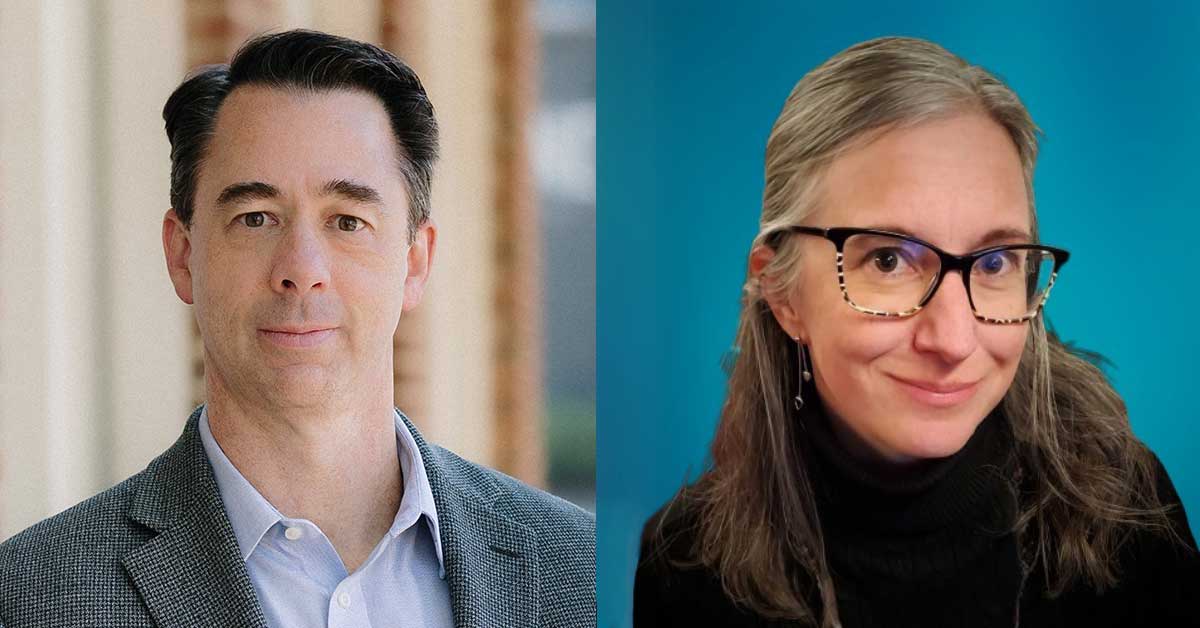
That’s what Kevin Turner, principal architect, hX, told us when we met with him and his wife, The Rev. Kathy Turner. That unassuming sense of mission echoes in both Kevin’s work as an architect and Kathy’s vocation as a clinical chaplain. While their careers rarely intersect on project teams, at home, conversation blurs the lines between architecture and spiritual care and poses bigger questions about what healing spaces truly demand when lives are at their most vulnerable.
Everyone reading this understands the role of the architect, but perhaps not the role of clinical chaplain. Let’s dive into that first to demonstrate its valuable place in our conversation.
The Hidden Work of a Chaplain
Kathy has been a chaplain for about 20 years, serving in both mental health and general hospitals. She also shares her perspective publicly on her podcast Angel 2nd Class, which celebrates extraordinary people and their stories of resilience.
A chaplain provides spiritual and emotional support to people of all backgrounds, serving as a compassionate listener and source of comfort during difficult times without imposing their own beliefs. Their core role is to foster understanding and healing, helping individuals find peace and meaning regardless of faith tradition.
In a healthcare setting, chaplains often operate quietly, their work hard to measure but fundamental to recovery. Much of Kathy’s role is about presence—sitting with people in distress, protecting their dignity, or offering prayer in spaces never meant for solitude.
Still, many providers see chaplains as optional because they don’t generate direct revenue. “If you’re not an income source, your value is often treated as ‘nice to have,’” Kathy notes, even though research shows chaplains can save money by resolving conflict and reducing strain on staff.
She recalled one case where a family considering legal action was referred to her. After two hours of listening and advocacy, she helped the care team address their concerns, and as a result of their discussion the family dropped the lawyers entirely. “Sometimes just understanding the why makes all the difference,” she said. Kevin pointed out she had probably saved the hospital more in that one day than her entire salary.
That mediator role surfaces often. Kathy remembers working with divorced parents locked in conflict over their adult child’s treatment. By focusing conversations on the patient’s wishes, she guided them to a resolution.
For Kathy, these examples prove why spiritual care should be considered essential. “The New York Times recently reported that 70% of Americans consider themselves spiritual,” she said. “If a psychiatric facility isn’t addressing spiritual needs, then a key component of care is missing.”
She emphasizes that chaplains are not there to proselytize but to walk alongside anyone, wherever they are in their spiritual journey. Becoming board-certified requires seven years of training after a bachelor’s degree, along with rigorous continuing education.
“She needs two and a half times more continuing education credits than I do,” Kevin noted, “and ongoing research.”
Sometimes, what patients share with her are things they have never discussed with anyone else. One young man confided that he wanted to end his life because he believed he was going to hell for being gay. He didn’t tell his doctors or his family; he only told Kathy. After several conversations, she convinced him to let her bring it to the care team. She stood by him when he finally opened up to his parents.
“The doctors didn’t even know his root struggle,” Kevin reflected. “Because he trusted Kathy, the team could make a difference. Who knows how his life might have turned out otherwise?”
“But I love it. I love being with people—helping them keep their dignity and just being there so they feel like someone is on their side,” said Kathy.
Where Chaplaincy & Architecture Meet
Although their professions seem worlds apart, Kevin and Kathy Turner continually shape each other’s perspectives.
But first it’s important to mention that different perspectives are a feature of hX. Kevin’s partner at the firm is Sherri Reyes, a Principal and Behavioral Healthcare Consultant whose expertise spans over 30 years in clinical, operational, and executive leadership. She served as CEO of multiple psychiatric hospitals across the country and oversaw behavioral health operations in diverse medical settings.
While Kevin leads on design innovation, Sherri brings a deep understanding of behavioral health business strategy, regulatory compliance, and operational efficiency.
This culture of embracing diverse expertise means that questioning assumptions is encouraged and often leads to interesting conversations at home as well. Kevin recalls once remarking, almost offhand, that most of his firm’s projects didn’t include chapels or chaplaincy programs. This sparked, as he put it, “a little volcano.” Kathy challenged him: Why on earth wasn’t he advocating for spiritual care in facilities?
“I realized I had better information than anyone else, and I wasn’t using it,” Kevin admitted. Since that moment, he sees design as an opportunity to raise questions others overlook.
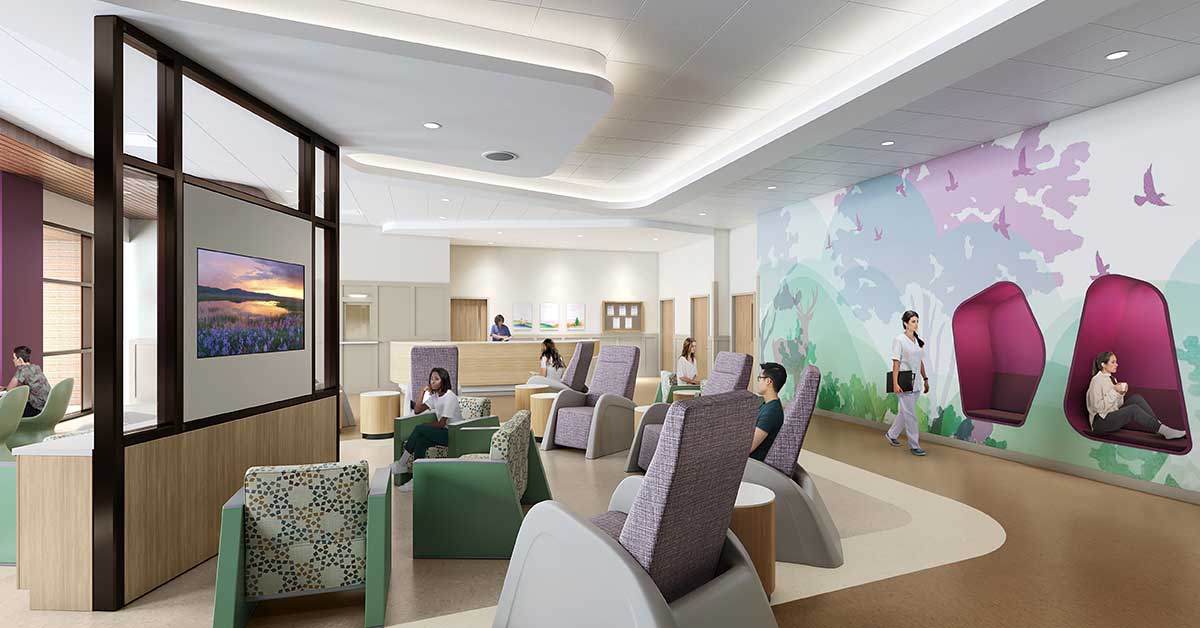
For Kevin and Kathy, spiritual care isn’t about overt religious symbols; it’s about creating spaces where people in crisis feel safe, private, and respected. That often comes down to small but important design choices: a conference room with windows that balance privacy and supervision, or layouts that allow chaplains to meet patients without interruption. Good architecture, he says, should act as a “silent collaborator,” shaping care without demanding notice.
Kathy reinforces that spiritual care is never separate from the patient experience but that it is built into every hallway, waiting room, or quiet nook. Yet chapels often miss the mark. “So many look like spas—clouds, water, meditation music. Beautiful, but not sacred,” she explains. In trying to serve all faiths, they end up serving none. What makes a real difference, she says, is simple accommodation. That can be a kneeling rail for Catholics, an orientation toward Mecca for Muslims, or storage for prayer rugs.

The chaplain’s own space is another afterthought. Kathy isn’t asking for much: ideally, it would be a modest, calm room, much like a psychiatrist’s office. She envisions comfortable chairs for families, a window designed with the particular blend of safety and privacy needed in her line of work, and storage for the tools of her trade. These tools include religious items like a Bible and rosary, but also secular items like coloring books and essential oils. Above all, it should be easy for patients and families to find.
Taken together, their ongoing dialogue shows how architecture can either enable or undermine healing through quiet, almost invisible choices. Each detail may seem small, but collectively the environment sends a message: your dignity matters here.
Seeing Beyond the Crisis
Kevin emphasizes that patients in psychiatric care are often seen at their lowest point. “Nobody looks at someone with a broken leg and thinks they’ll never walk again. But with psychiatric patients, we too often assume the crisis defines them permanently.” His point is that these patients are fully functional before the crisis and, with the right support, can regain full functionality.
That perspective extends to design. Too often, facilities assume every patient will harm property or cause disruption. “Yes, we must protect against rare incidents,” Kevin says, “but if design only prepares for the worst moment, we’re not helping people get better.” Environments should encourage recovery, not freeze patients in crisis.
Kathy has seen this in practice. One day in town, she ran into a former inpatient. To her delight, he was back in college and thriving. “It was so great to see his life was back on track,” she recalls. But she doesn’t want such outcomes left to chance.
When discussing chaplaincy opportunities at the Katie Blessing Center, a youth behavioral health center, she suggested a follow-up program for young adults—something like an alumni network for former patients.
Kathy knows the personal importance of support networks. She has struggled with depression and admits she sometimes doesn’t schedule therapy appointments when life feels stable. Kevin gently reminds her when she begins to drift. “Not everyone has that,” she says. “Without support, people just naturally slide down the hill. The biggest thing a system can do is provide a network.”
The Katie Blessing Center
Kevin said that his firm’s favorite clients are the ones who know what they don’t know. The ones who want to learn and grow. Which is why hX is also working with the Katie Blessing Center—although that engagement came about in an unusual way.
Kevin explained that he and his partner agreed they didn’t have time to work on the project and would have to say no. Still, he decided to take the meeting to hear them out and hopefully refer them to another quality firm.
Needless to say, it didn’t quite go like that.
“Sherri asked me how they took it when I said no?” recounted Kevin. “I said it was hard to say. She asked why and I told her, well, because I didn’t say no. I said yes.”
Kevin explained, “I just fell in love with them, and we had to do it. Not only are they leading from the right heart, but they’re incredibly curious. One way that approach played out was when the Katie Blessing team intentionally reimagined part of the intake process.
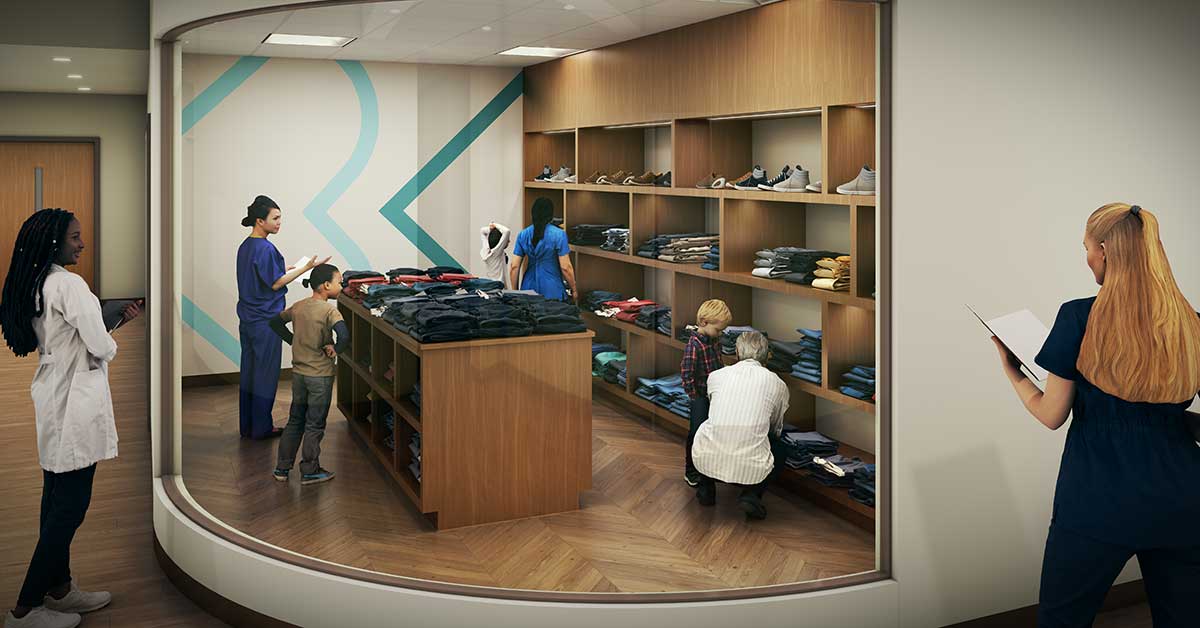
The intake process for an inpatient facility can be an especially stressful and disorienting time for young people, who often arrive in the midst of a crisis. Instead of being handed a standard hospital gown, at the Katie Blessing Center kids would be invited to pick out a set of safe, appropriate clothing—a pair of pants and a top, maybe jeans or a sweatshirt, in their choice of color or style.
This small but significant act is all about agency. Giving kids the ability to make a decision, however simple, helps restore a sense of control during a period when so much feels out of their hands.
Kevin explained that it was architecturally challenging to create an intake area that incorporates this welcoming and empowering intervention. “We wanted it to look more like a store at the mall, not the changing room at the military barracks or a jail.”
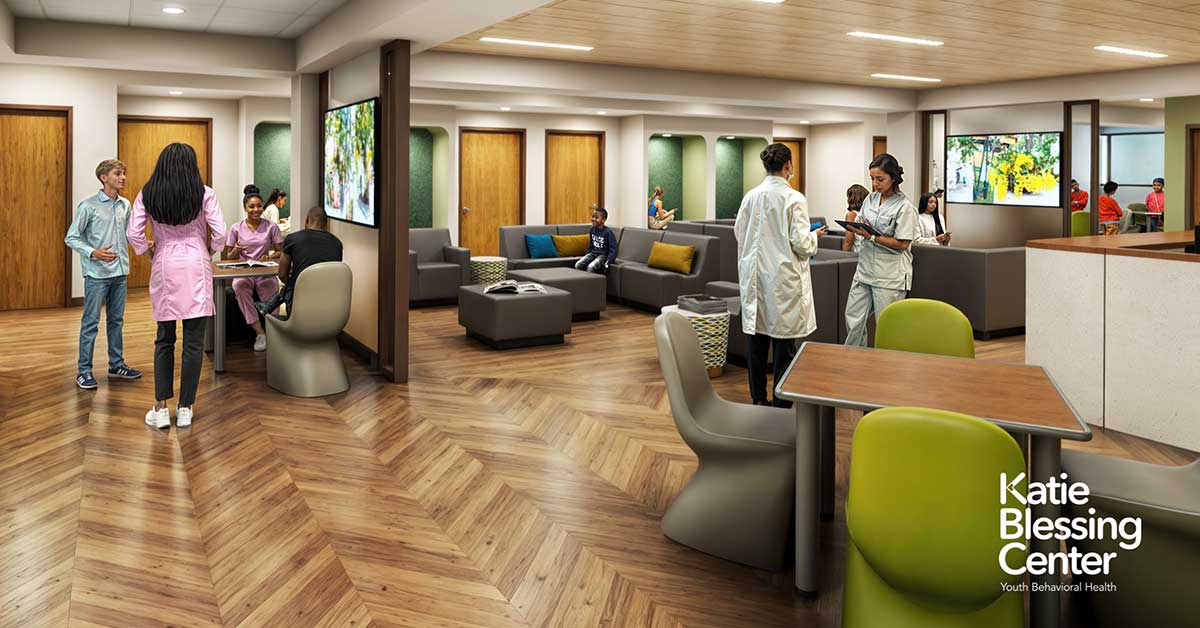
He said it’s a new approach for facilities like this, and while it hasn’t been widely tested, the hope is that letting kids make this one choice at the very start will ease their stress and help them feel respected throughout their stay.
“It was challenging,” Kevin admits, “but the entire team, not just us, worked hard to strike the right balance.”
Note: The Katie Blessing Center will be North Carolina’s largest and most advanced pediatric behavioral healthcare facility, providing innovative, evidence-based therapies, ensuring each child receives the comprehensive support they deserve. You can find more about the project underway at the center’s website, or listen to Kathy’s podcast!
The Partnership That Elevates Care
Kevin and Kathy’s partnership reframes the conversation about behavioral health facilities. Not as a debate between policy and practicality, but as an ongoing exploration of what makes healing possible. Stories from daily experience continue to shape their perspectives and spark new solutions. Their capacity to remain “incredibly curious” and openly acknowledge uncertainty challenges assumptions and raises the standard of care.
This humility—asking why, understanding context, and embracing the patient’s experience—is what drives innovation and deeper empathy on both sides of the architect-chaplain partnership. Maybe the most important lesson isn’t about credentials or plans, but about the willingness to listen, adapt, and lead from the heart.
As behavioral health spaces continue to evolve, it’s clear that the future belongs to those brave enough to ask new questions, honor uncertainty, and keep curiosity at the center of healing. There isn’t a manual for walking with people through crisis, but when we approach design and care with genuine curiosity, we find solutions we couldn’t have imagined on our own.